How to Start Your Own Ear Plug Brand: A Complete Private Label Guide
The global hearing protection market is projected to reach over $3.2 billion by 2030, driven by stricter workplace safety regulations, growing awareness of noise-induced hearing loss, and expanding industrial activity across developing economies. For entrepreneurs and safety product distributors, launching a private label ear plug brand has never been more viable — or more profitable.
But where do you actually start? How do you go from an idea to a finished product sitting on your customer's shelves?
This guide walks you through every step of building your own ear plug brand, from choosing the right product type to finding a reliable OEM manufacturer, navigating certifications, designing packaging, and placing your first order.
Why Private Label Ear Plugs? The Business Case
Before diving into the how, let's look at the why.
A Growing Market with Steady Demand
Hearing protection is not a trend — it's a regulatory requirement. In the United States alone, OSHA mandates hearing protection for workers exposed to noise levels above 85 dB, covering millions of workers in construction, manufacturing, mining, and aviation. Similar regulations exist across the EU (Directive 2003/10/EC), Australia (AS/NZS 1270), and the Middle East.
This means your customers aren't buying ear plugs because they want to — they're buying because they have to. That's the most reliable kind of demand.
High Margins on a Low-Cost Product
Ear plugs are one of the most affordable PPE products to manufacture, but retail margins are surprisingly strong. A pair of foam ear plugs that costs $0.03–0.05 to produce can retail for $0.50–2.00 per pair in branded packaging. Custom molded or filtered ear plugs carry even higher margins, often retailing at $15–30 per pair.
Low Barrier to Entry
Unlike complex PPE products like respirators or safety helmets, ear plugs have relatively simple designs, established manufacturing processes, and well-understood certification pathways. You don't need to invest in tooling or R&D — you can start with proven product designs from an experienced manufacturer.
Step 1: Choose Your Product Type
The first decision is what type of ear plugs to sell. Each type serves different markets and carries different margin profiles.
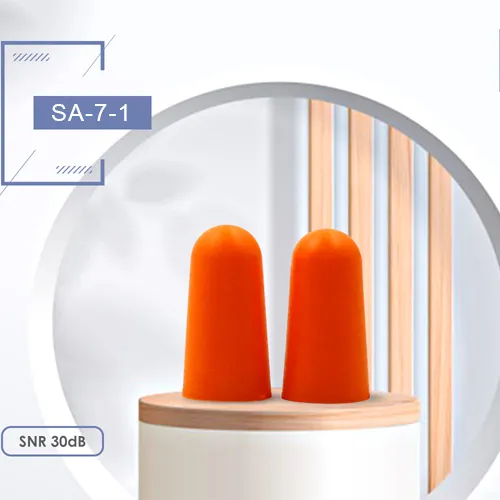
Foam Ear Plugs (Disposable)
| Feature | Detail |
|---|---|
| Material | Polyurethane (PU) foam |
| NRR Range | 29–33 dB |
| Best For | Industrial bulk supply, construction, manufacturing |
| Price Point | Low (high volume) |
| MOQ Typical | 50,000–100,000 pairs |
Foam ear plugs are the bread and butter of the hearing protection industry. They're disposable, cost-effective, and used in massive quantities. If you're targeting industrial distributors or safety supply companies, this is your entry point.
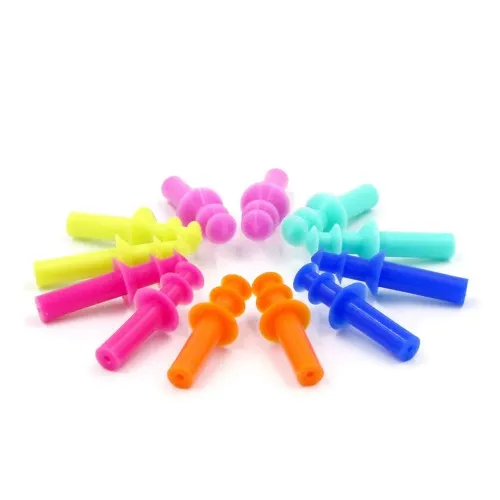
Silicone Ear Plugs (Reusable)
| Feature | Detail |
|---|---|
| Material | Medical-grade silicone |
| NRR Range | 22–28 dB |
| Best For | Swimming, sleeping, travel, concerts |
| Price Point | Medium |
| MOQ Typical | 5,000–20,000 pairs |
Silicone ear plugs are reusable, washable, and increasingly popular in consumer markets. They're ideal for lifestyle brands targeting swimmers, light sleepers, travelers, and concert-goers.
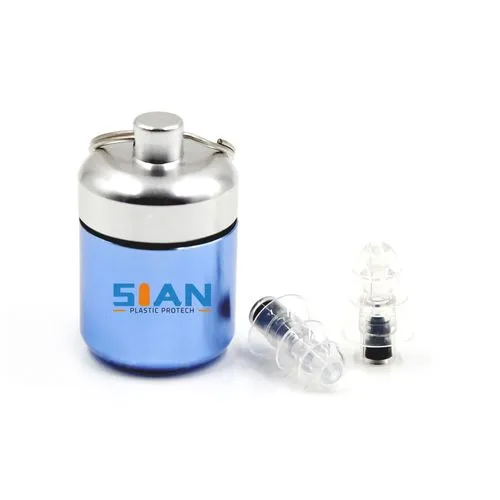
Filtered Ear Plugs (High-Fidelity)
| Feature | Detail |
|---|---|
| Material | Silicone body + acoustic filter |
| NRR Range | 12–20 dB (flat attenuation) |
| Best For | Musicians, bartenders, event staff |
| Price Point | High |
| MOQ Typical | 3,000–10,000 pairs |
Filtered ear plugs reduce noise evenly across frequencies, preserving sound clarity while lowering volume. This is a premium segment with strong brand potential and loyal customers.
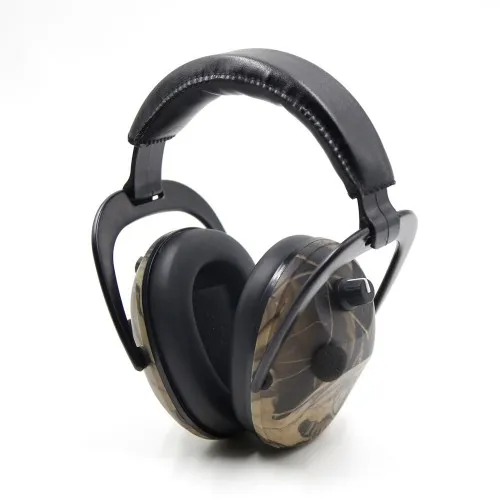
Ear Muffs (Passive & Electronic)
| Feature | Detail |
|---|---|
| Material | ABS shell, foam cushion |
| NRR Range | 20–30 dB |
| Best For | Construction, shooting, landscaping |
| Price Point | Medium to high |
| MOQ Typical | 1,000–5,000 units |
Ear muffs are higher-ticket items that work well as hero products in a hearing protection brand. Electronic ear muffs with active noise cancellation are particularly popular in the shooting sports market.
Moldable Ear Plugs (Custom Fit)
| Feature | Detail |
|---|---|
| Material | Thermoplastic or silicone putty |
| NRR Range | 22–28 dB |
| Best For | Industrial workers, sleeping, travel |
| Price Point | Medium |
| MOQ Typical | 5,000–15,000 pairs |
Moldable ear plugs conform to the user's ear canal for a personalized fit. They're a strong value proposition for brands focused on comfort differentiation.
Our recommendation for first-time brand owners: Start with one or two product types that align with your target market. For B2B industrial supply, begin with foam ear plugs. For consumer/lifestyle brands, filtered or silicone ear plugs offer higher margins and stronger brand identity.
Step 2: Understand Certifications
Selling hearing protection without proper certification is not just risky — it's illegal in most markets. Here's what you need to know.
For the North American Market
- ANSI S3.19-1974 or ANSI/ASA S12.6-2016: The American standard for measuring noise reduction
- NRR (Noise Reduction Rating): Required on all packaging sold in the US and Canada
- EPA Registration: The US Environmental Protection Agency requires all hearing protectors to be registered and labeled
For the European Market
- EN 352-2:2002 (ear plugs) or EN 352-1:2002 (ear muffs): The European harmonized standard
- CE Marking: Mandatory for sale in all EU/EEA countries
- SNR (Single Number Rating): The European equivalent of NRR
For Other Markets
- AS/NZS 1270: Required for Australia and New Zealand
- GOST: Required for Russia and CIS countries
What This Means for You
You don't have to handle certifications yourself. A qualified OEM manufacturer will already have these certifications for their product lines. When you private label their products, the certifications carry over — you just need to ensure your labeling and documentation comply with your target market's requirements.
At EASTRAGON, all our hearing protection products are CE and ANSI certified, covering the two largest export markets. We handle the testing and documentation, so you can focus on building your brand.
Step 3: Find the Right OEM Manufacturer
This is the most critical step. Your manufacturer is not just a supplier — they're your production partner. The wrong choice can mean quality issues, delivery delays, and certification problems. The right choice gives you a competitive edge.
What to Look For
1. Specialization in Hearing Protection
Avoid general PPE factories that make everything from hard hats to safety shoes. A manufacturer that specializes in hearing protection will have deeper expertise in materials, acoustics, and noise reduction testing.
2. Established Certifications
Verify that the manufacturer holds current CE and ANSI certifications — not just claims on their website. Ask for copies of test reports from accredited laboratories like SGS, TUV, or Intertek.
3. Production Capacity
Make sure the factory can scale with your growth. Key questions to ask:
- What is your monthly production capacity for [product type]?
- What are your typical lead times?
- Can you handle seasonal spikes in demand?
4. OEM/ODM Experience
A manufacturer with OEM experience will have established processes for:
- Custom logo printing and embossing
- Custom color matching (Pantone)
- Custom packaging design and production
- Private label documentation and compliance labeling
5. Sample and Quality Control Process
Before committing to a large order, always request samples. A reliable manufacturer will offer:
- Free or low-cost samples within 3–7 days
- Pre-production samples for approval before mass production
- In-process quality inspection reports
- Final random inspection before shipment
6. Communication and Responsiveness
Working across time zones requires a manufacturer that communicates proactively. Look for English-speaking sales teams with experience serving international clients.
Red Flags to Watch For
- No verifiable certifications or test reports
- Unwillingness to provide factory photos or video tours
- Extremely low prices with no explanation (may indicate inferior materials)
- No clear MOQ or lead time commitments
- Requiring full payment before production begins
Step 4: Design Your Brand Identity
With your product type selected and manufacturer in place, it's time to build your brand.
Brand Name and Logo
Choose a name that communicates your brand positioning:
- For industrial/B2B: Names that convey reliability and protection (e.g., "ShieldHear," "ProGuard")
- For consumer/lifestyle: Names that convey comfort and lifestyle (e.g., "QuietLife," "HushPlugs")
Packaging Design
Packaging is where your brand comes to life on the shelf (or in the Amazon listing). Key considerations:
- Retail-ready packaging: Blister cards, clamshell, or stand-up pouches
- Bulk packaging: Dispenser boxes (200–500 pairs) for industrial clients
- Required information: NRR/SNR rating, usage instructions, certification marks, material composition
- Branding elements: Logo, brand colors, tagline, QR code linking to your website
Most OEM manufacturers, including EASTRAGON, offer full packaging customization — from design consultation to final production.
Product Differentiation
In a crowded market, differentiation matters. Consider:
- Unique colors or patterns (especially for consumer markets)
- Eco-friendly materials or packaging (growing demand)
- Bundled kits (e.g., ear plugs + carrying case + cleaning tool)
- Industry-specific packaging (construction kits, musician kits, sleep kits)
Step 5: Place Your First Order
Typical Order Process
Here's what a standard private label order looks like from inquiry to delivery:
| Stage | Timeline | What Happens |
|---|---|---|
| 1. Inquiry & Quotation | Day 1–3 | Discuss product specs, MOQ, pricing |
| 2. Sample Approval | Day 4–14 | Receive and approve product samples |
| 3. Artwork Confirmation | Day 15–20 | Finalize logo, packaging design, compliance labels |
| 4. Pre-Production Sample | Day 21–25 | Approve final sample with your branding |
| 5. Mass Production | Day 26–55 | Production (typically 25–30 days) |
| 6. Quality Inspection | Day 56–58 | Final inspection and test reports |
| 7. Shipping | Day 59–80 | Sea freight (20–25 days) or air freight (5–7 days) |
Total timeline from inquiry to delivery: approximately 60–80 days for sea freight, or 40–50 days for air freight.
Pricing Structure
OEM pricing depends on several factors:
- Product type: Foam ear plugs are cheapest; electronic ear muffs are most expensive
- Order quantity: Higher volume = lower unit price
- Customization level: Stock products cost less than fully custom designs
- Packaging complexity: Simple poly bags vs. retail blister cards
- Certification requirements: Additional market-specific testing adds cost
Request a detailed quotation that breaks down product cost, packaging cost, certification cost (if applicable), and shipping estimates.
Payment Terms
Standard industry practice for first orders:
- 30% deposit upon order confirmation
- 70% balance before shipment (against copy of Bill of Lading)
Established relationships may qualify for more favorable terms such as net-30 or Letter of Credit.
Step 6: Launch and Scale Your Brand
Sales Channels to Consider
| Channel | Best For | Margin | Effort |
|---|---|---|---|
| Amazon / eBay | Consumer products | Medium | Medium |
| Your own website | Brand building | High | High |
| Industrial distributors | Bulk B2B | Low-medium | Low |
| Safety supply companies | B2B niche | Medium | Medium |
| Retail stores (Home Depot, etc.) | High volume consumer | Low | Very high |
Marketing Your Brand
- Content marketing: Blog posts, buying guides, comparison articles (like this one)
- Amazon PPC: Essential for Amazon-based brands
- Trade shows: A+A (Dusseldorf), NSC Safety Congress, ISHN
- LinkedIn: B2B outreach to safety managers and procurement teams
- Certifications as marketing: Display CE, ANSI, and test data prominently
Scaling Over Time
Once your first product is established:
- Expand your product line — Add complementary products (ear muffs if you started with ear plugs, or vice versa)
- Enter new markets — Use your manufacturer's certifications to sell in Europe, Middle East, or Latin America
- Develop custom products — Move from OEM (your brand on existing products) to ODM (custom-designed products exclusive to your brand)
- Build B2B relationships — Become an approved supplier for large companies or government contracts
Ready to Start Your Ear Plug Brand?
Launching a hearing protection brand doesn't require millions in investment or years of product development. With the right OEM manufacturing partner, you can go from concept to market in as little as 60 days.
At EASTRAGON, we've helped brands across 50+ countries bring their hearing protection products to market. With over 200 million units produced annually, CE and ANSI certified product lines, and full OEM/ODM services including custom packaging and compliance labeling, we make private labeling straightforward.
Here's how to get started:
- Browse our product catalog to find the right product type for your brand
- Request free samples — we'll ship within 5 business days
- Our team will provide a detailed quotation and help you plan your launch
Frequently Asked Questions
What is the minimum order quantity (MOQ) for private label ear plugs?
MOQs vary by product type. Foam ear plugs typically start at 50,000 pairs, while silicone and filtered ear plugs can start as low as 3,000–5,000 pairs. Ear muffs usually have an MOQ of 1,000–3,000 units. These quantities ensure cost-effective production while keeping your per-unit price competitive.
How long does it take to produce a private label order?
A typical private label order takes 60–80 days from initial inquiry to delivery by sea freight. This includes sample approval (1–2 weeks), artwork confirmation (1 week), production (3–4 weeks), and shipping (3–4 weeks by sea). Air freight can reduce total time to 40–50 days.
Do I need my own certifications to sell ear plugs?
When you private label products from a certified manufacturer, the product certifications (CE, ANSI test data) carry over to your brand. However, you are responsible for ensuring your labeling and packaging comply with local regulations, including displaying the correct NRR/SNR rating and usage instructions.
Can I customize the product design, not just the packaging?
Yes. OEM means putting your brand on an existing product design. ODM means the manufacturer develops a custom product to your specifications. Most manufacturers offer both options, with ODM requiring higher MOQs and longer lead times due to tooling and testing requirements.
How do I verify that a manufacturer's certifications are genuine?
Ask for copies of test reports from accredited third-party laboratories such as SGS, TUV, Intertek, or Bureau Veritas. These reports should reference specific product models and testing standards (e.g., EN 352-2, ANSI S3.19). You can also contact the testing laboratory directly to verify the report's authenticity.
What's the difference between NRR and SNR?
NRR (Noise Reduction Rating) is the standard used in North America, while SNR (Single Number Rating) is used in Europe. Both measure how much noise an ear plug can block, but they use different testing methods. NRR values are typically 3–5 dB lower than SNR values for the same product. If you plan to sell in both markets, choose a manufacturer that provides both ratings.
Can I start with a small test order?
Most manufacturers are flexible with first orders. While the pricing per unit will be higher at lower quantities, many OEM partners — including EASTRAGON — will work with you on a smaller initial order to test the market, with the understanding that subsequent orders will meet standard MOQs.
Published by EASTRAGON — Professional hearing protection manufacturer since 2005. CE & ANSI certified. OEM/ODM services for 50+ countries.