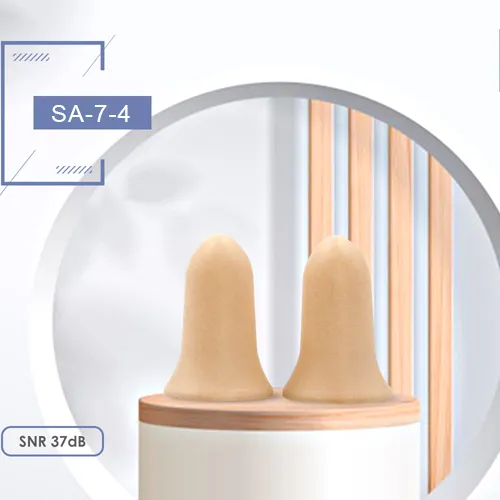
SNR (Single Number Rating) is the EU noise-reduction metric tested under ISO 4869-2, while NRR (Noise Reduction Rating) is the US equivalent regulated by the EPA under ANSI S3.19. For the same ear plug, the SNR value is typically 3-5 dB higher than the NRR because the two standards use different test protocols and subject-fit assumptions. A foam ear plug rated NRR 33 in the US market will show approximately SNR 37 on its CE documentation. Buyers sourcing hearing protection across both markets must understand this difference to avoid mismatched compliance claims.
What Is NRR (Noise Reduction Rating)?
Industry definition: NRR (Noise Reduction Rating) is a single-number decibel value that indicates how much a hearing protection device reduces sound reaching the wearer's ear, as measured under controlled laboratory conditions per OSHA workplace noise standards. The rating is regulated by the US Environmental Protection Agency (EPA) and based on testing standards defined by ANSI S3.19 (legacy) and ANSI/ASA S12.6 (current). According to ANSI S3.19, test subjects are trained in proper insertion before measurement, which is why laboratory NRR values often exceed real-world performance.
NRR values for hearing protectors typically range from 15 to 33 dB. A higher number means greater noise reduction. However, the real-world performance is often significantly lower than the laboratory-tested NRR value. NIOSH (CDC) and OSHA recommend derating the NRR by 50% to estimate actual workplace protection. For example, a product with NRR 33 would provide an estimated real-world attenuation of about 16 dB.
The formula for estimating actual noise exposure with NRR is:
Estimated exposure = Workplace noise level (dBA) - ((NRR - 7) / 2)
This formula accounts for the difference between C-weighted and A-weighted sound measurements and applies the OSHA 50% derating factor.
What Is SNR (Single Number Rating)?
Official spec: SNR (Single Number Rating) is the European standard for quantifying hearing protector attenuation, defined under EN 352 and calculated per ISO 4869-2. It is regulated by the European Union under the EU Noise Directive 2003/10/EC. The testing methodology differs from the American NRR in several important ways.
First, according to ISO 4869-2, SNR uses a different test protocol that generally produces higher numbers than NRR for the same product. SNR values typically range from 20 to 39 dB. Second, SNR testing uses subjects who are trained in proper insertion techniques, while NRR testing (under ANSI S3.19) historically used a trained-subject method that may not reflect real-world usage.
The SNR system also includes H (High), M (Medium), and L (Low) frequency ratings that provide more detailed attenuation data:
- H value: Attenuation at high frequencies (dominant in most industrial noise)
- M value: Attenuation at medium frequencies
- L value: Attenuation at low frequencies (engines, heavy machinery)
This HML breakdown is valuable because different noise environments have different frequency profiles. A product with a high SNR but low L value may not be suitable for environments dominated by low-frequency machinery noise.
Why the Same Product Can Show Different SNR and NRR Values
Buyers often assume that if one package says SNR 37 and another says NRR 33, the products must be different. In many cases, they are not. The difference usually comes from how the performance is tested, calculated, and reported. That distinction matters if you source for multiple markets or if your customer asks for technical documentation rather than only a headline number on a label.
European buyers usually expect CE-oriented documentation with SNR and HML data. North American buyers usually expect NRR values tied to ANSI and EPA-related labeling practice. The product may still be commercially similar, but the documents and claims must match the destination market.
How Buyers Should Read Spec Sheets
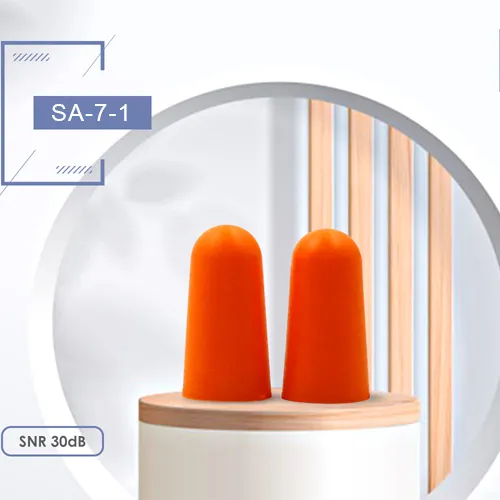
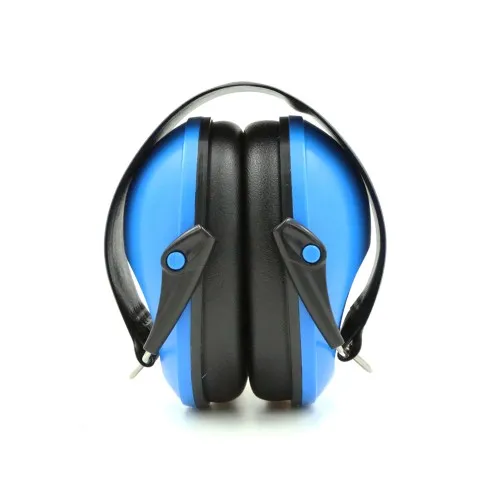
A strong hearing protection spec sheet should identify the exact model tested, the standard used, the laboratory, and the application. That is why buyers compare not only rating numbers but also product type. For example, the SA-7-1 Classical Bullet Shape PU Foam Ear Plugs and the SA-7-4 Bell Shape Slow Rebound Foam Ear Plugs are appropriate for high-attenuation industrial use, while the SA-2-1 Standard Filtered Earplugs are more appropriate when sound clarity is still important. For intermittent access or shared-use environments, buyers may also review earmuff options such as the SA-8-5 Durable Soundproof Foldable Earmuffs.
Common Mistakes When Comparing SNR and NRR
- Choosing only by the highest printed number. Real field performance depends on fit, training, and application.
- Ignoring destination-market rules. A claim suitable for one market may be incomplete or misleading in another.
- Requesting only a sales datasheet. Serious buyers should request the full laboratory report.
- Assuming all reusable products should be compared to disposable industrial plugs on the same basis. Application still matters.
Understanding these details helps private label brands, distributors, and safety buyers make cleaner procurement decisions and avoid mismatched technical claims in sales materials.
It also improves sales conversations. When your customer asks why one certified ear plug shows two different published numbers in different regions, your team can explain the difference clearly instead of treating it like a contradiction. That kind of technical clarity builds trust and reduces procurement friction, especially in B2B transactions where compliance documentation matters as much as price.
For importers and distributors, that knowledge also supports better catalog management. Instead of mixing all hearing protectors into one comparison table, you can separate industrial attenuation products, communication-oriented products, and market-specific certified SKUs. That makes your product line easier for buyers to understand and easier for your sales team to defend.
SNR vs NRR: Key Differences at a Glance
| Feature | NRR (US) | SNR (EU) |
|---|---|---|
| Standard | ANSI S3.19 / S12.6 | EN 352 / ISO 4869 |
| Region | USA, Latin America | Europe, Asia, Africa |
| Typical Range | 15-33 dB | 20-39 dB |
| Frequency Detail | Single number only | SNR + H, M, L values |
| Derating | OSHA: 50% derating | Use as-is or per national rules |
How to Convert Between SNR and NRR
There is no exact mathematical conversion between SNR and NRR because they use different test methods — per ANSI S3.19 (NRR) and ISO 4869-2 (SNR). However, as a rough rule of thumb, SNR values tend to be approximately 3-5 dB higher than NRR values for the same product. For example, a foam ear plug with an NRR of 33 might have an SNR of 37. The CDC/NIOSH hearing protection guidance recommends using individual fit-testing rather than relying solely on either published rating for workplace decisions.
If you are sourcing products for multiple markets and need both certifications, look for manufacturers who test to both standards. At EASTRAGON, our products carry both CE EN352-2 and ANSI S3.19 certifications, with both SNR and NRR values tested and documented.
Practical Selection Guide by Noise Level
Here is a practical guide for selecting the right hearing protection based on your workplace noise levels:
- 85-90 dB: Most ear plugs or ear muffs with NRR 20+ / SNR 24+ are sufficient.
- 90-95 dB: Choose products with NRR 25+ / SNR 28+. Our SA-7-1 foam ear plugs are well-suited for this range.
- 95-100 dB: High-NRR foam ear plugs (NRR 29+) such as the SA-7-4 bell shape foam ear plugs are recommended.
- 100-105 dB: Use the highest-rated ear plugs or consider dual protection (plugs + muffs).
- Above 105 dB: Dual protection is strongly recommended. Combine high-NRR foam ear plugs with quality ear muffs.
Understanding Filter Ear Plugs and Flat Attenuation
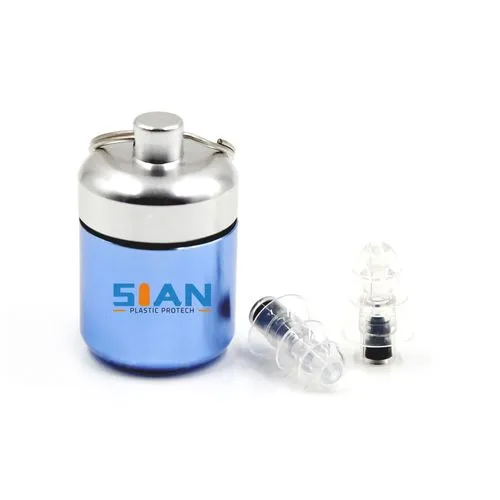
Not all applications require maximum noise reduction. In music, communication-critical, and entertainment environments, filter ear plugs like our SA-2-1 Standard Filtered Earplugs provide flat attenuation, meaning they reduce all frequencies more or less equally. This preserves sound quality and speech intelligibility while reducing overall volume to safe levels. These products are rated differently and should not be compared directly to industrial-grade foam ear plugs on NRR alone.
What to Ask Your Supplier
When sourcing hearing protection products, ensure your supplier can provide the following documentation:
- CE Declaration of Conformity (for products sold in Europe)
- ANSI test reports (for products sold in North America)
- Complete attenuation data at each test frequency (not just the single-number rating)
- Information on which test standard and method was used
- Quality management system certification (ISO 9001 or equivalent)
At EASTRAGON, we provide complete test documentation for every product and can supply both CE and ANSI certified products from our own factory. Request technical data sheets for any product in our catalog.
Frequently Asked Questions
Which rating is usually higher, SNR or NRR?
SNR often appears numerically higher than NRR for the same hearing protector because the standards use different methodologies and assumptions. Buyers should not interpret that difference as a guarantee of better product performance.
Can I compare SNR and NRR directly when sourcing products?
You can compare them at a broad level, but procurement decisions should still rely on the exact test standard, application, and supporting documents for the specific model.
Do I need both SNR and NRR if I sell globally?
If you target both Europe and North America, having both can be very useful. It allows packaging, documentation, and customer communication to align with each market.
Why does OSHA reduce the NRR in field calculations?
Because laboratory ratings often overestimate what happens in real use. Derating helps estimate a more realistic level of workplace protection.
Are filtered ear plugs rated in the same way as foam ear plugs?
They are tested within the same general standards framework, but they are selected for different applications. Buyers should compare them based on intended use, not just the single-number rating.
What document should I request first from a supplier?
Request the full laboratory test report for the exact model you intend to buy. That is the cleanest way to verify the published SNR or NRR value.
Can one supplier support both CE and ANSI requirements?
Yes. Many export-oriented manufacturers support both systems, provided the specific model has been tested and documented correctly for both markets.