Foam ear plugs are disposable, high-NRR (29–33 dB) polyurethane inserts designed for industrial bulk use at $0.02–0.05/pair FOB. Silicone ear plugs are reusable, lower-NRR (17–27 dB) injection-molded inserts suited for consumer and lifestyle brands at $0.30–1.50/pair FOB. Choose foam for B2B industrial volume with recurring revenue; choose silicone for premium branding with higher per-unit margins. Many businesses source both to cover the full market.
If you're sourcing hearing protection for your brand, distribution business, or workplace safety program, the first decision you'll face is material: foam or silicone?
It's not just a technical choice — it determines your target market, your margin structure, your MOQ requirements, and even your branding strategy. A foam ear plug sold in bulk to a factory floor operates in a completely different business model than a reusable silicone ear plug sold on Amazon to concert-goers.
This guide compares foam and silicone ear plugs across every dimension that matters to B2B buyers: material properties, noise reduction performance, cost structure, target markets, and sourcing considerations. By the end, you'll know exactly which type — or which combination — fits your business.
Material Science: What Makes Them Different
Foam Ear Plugs
Foam ear plugs are made from slow-recovery polyurethane (PU) foam. The user rolls the plug into a tight cylinder, inserts it into the ear canal, and the foam slowly expands to fill the canal and create an airtight seal.
Key material properties:
- Memory foam expansion: Returns to original shape after compression, creating a custom seal in every ear canal
- Open-cell structure: Millions of tiny air pockets absorb sound energy across all frequencies
- Skin-friendly surface: Smooth, non-irritating texture suitable for extended wear
- Single-use design: Hygiene deteriorates after one use; designed to be disposable
- Temperature sensitive: Becomes stiffer in cold environments, softer in warm environments
Silicone Ear Plugs
Silicone ear plugs are manufactured from medical-grade or food-grade silicone through injection molding. They come in pre-formed shapes — flanged, conical, or custom-molded — and seal the ear canal through mechanical fit rather than expansion.
Key material properties:
- Durable and washable: Maintains shape and performance over hundreds of uses
- Hypoallergenic: Medical-grade silicone is biocompatible, suitable for sensitive skin
- Consistent fit: Pre-formed shape provides the same seal every time without insertion technique dependency
- Temperature stable: Performance is consistent across a wide temperature range
- Non-porous surface: Easy to clean, resistant to bacteria buildup
Noise Reduction Performance
| Metric | Foam Ear Plugs | Silicone Ear Plugs |
|---|---|---|
| NRR Range | 29–33 dB | 17–27 dB |
| SNR Range | 35–39 dB | 20–30 dB |
| Best attenuation | High frequencies (grinding, sawing) | Mid frequencies (conversation, machinery hum) |
| Weakest attenuation | Low frequencies (engines, generators) | High frequencies |
| Seal mechanism | Foam expansion fills ear canal | Flanges or cone create mechanical seal |
| Fit dependency | Proper insertion technique required | Less technique-dependent |
| Real-world performance gap | Large (lab NRR vs actual can differ by 50%) | Smaller (more consistent real-world performance) |
The key insight for buyers: Foam ear plugs have higher lab NRR numbers, but the gap between lab and real-world performance is larger because proper insertion technique is critical. Silicone ear plugs have lower NRR numbers, but their real-world performance is more predictable because the pre-formed shape reduces user error.
For a detailed explanation of how NRR and SNR ratings work and why lab numbers don't always match real-world protection, see our certification guide.
Cost Structure and Margin Analysis
This is where the business case gets interesting. Foam and silicone ear plugs operate in fundamentally different economic models.
Foam Ear Plugs: High Volume, Low Unit Price
| Cost Factor | Typical Range |
|---|---|
| Factory cost (FOB China) | $0.02–0.05 per pair |
| Branded packaging (blister card) | $0.03–0.08 per pair |
| Landed cost (sea freight to US) | $0.08–0.15 per pair |
| Wholesale price | $0.15–0.40 per pair |
| Retail price | $0.50–2.00 per pair |
| Gross margin (wholesale) | 50–70% |
| Typical MOQ | 50,000–100,000 pairs |
| Reorder frequency | High (disposable = repeat purchases) |
The foam business model: Low unit price, high volume, strong repeat purchasing. Your customers buy foam ear plugs because they use them every day and throw them away. This creates a predictable, recurring revenue stream. The challenge is that unit margins are thin, so you need volume to make the economics work.
Silicone Ear Plugs: Lower Volume, Higher Unit Price
| Cost Factor | Typical Range |
|---|---|
| Factory cost (FOB China) | $0.30–1.50 per pair |
| Branded packaging (retail box with case) | $0.20–0.60 per pair |
| Landed cost (sea freight to US) | $0.80–2.50 per pair |
| Wholesale price | $3.00–8.00 per pair |
| Retail price | $8.00–25.00 per pair |
| Gross margin (wholesale) | 60–75% |
| Typical MOQ | 3,000–20,000 pairs |
| Reorder frequency | Lower (reusable = less frequent replacement) |
The silicone business model: Higher unit price, stronger brand value, better per-unit margins, but lower reorder frequency because the product lasts months or years. This model rewards strong branding and premium positioning.
Side-by-Side Economics
| Business Factor | Foam | Silicone |
|---|---|---|
| Capital required to start | Higher (large MOQ) | Lower (smaller MOQ) |
| Revenue per unit | Low ($0.15–0.40 wholesale) | High ($3.00–8.00 wholesale) |
| Margin per unit | $0.05–0.20 | $1.50–5.00 |
| Revenue model | Recurring (disposable) | One-time + replacement |
| Inventory risk | Lower (commodity, always in demand) | Higher (style/feature dependent) |
| Brand differentiation | Difficult (commodity product) | Easier (design, features, packaging) |
| Amazon potential | Limited (price competition intense) | Strong (brand and feature differentiation) |
| B2B industrial potential | Very strong | Moderate |
Target Market Fit
Who Buys Foam Ear Plugs?
| Buyer Type | Use Case | Volume | Price Sensitivity |
|---|---|---|---|
| Industrial distributors | Factory floors, construction sites | Very high | High |
| Safety supply companies | Workplace safety programs | High | Medium |
| Government/military | Training ranges, bases | Very high | Medium (procurement contracts) |
| Hospitality | Hotels (guest amenity) | Medium | High |
| Healthcare | Patient ear protection | Medium | Medium |
Foam ear plugs are a B2B-first product. The primary buyers are businesses purchasing for their workforce, not individual consumers. Marketing focuses on price per unit, certification compliance, bulk packaging, and supply reliability.
Who Buys Silicone Ear Plugs?
| Buyer Type | Use Case | Volume | Price Sensitivity |
|---|---|---|---|
| Musicians and audio professionals | Concerts, studios, rehearsals | Low-medium | Low (value quality) |
| Consumer brands | Sleep, travel, swimming, study | Medium | Medium |
| Event companies | Festivals, conferences | Medium | Medium |
| Recreational shooters | Shooting ranges | Low-medium | Low |
| Parents | Children's hearing protection | Low-medium | Medium |
| Industrial (reusable programs) | Factories with wash-and-reuse programs | Medium | Medium |
Silicone ear plugs serve both B2B and B2C markets. The product supports premium branding, lifestyle marketing, and higher per-unit pricing. Marketing focuses on comfort, reusability, design, and specific use-case solutions.
Product Variants and Customization
Foam Ear Plug Variants
| Variant | Description | Target Application |
|---|---|---|
| Bullet shape | Classic tapered design, most common | General industrial use |
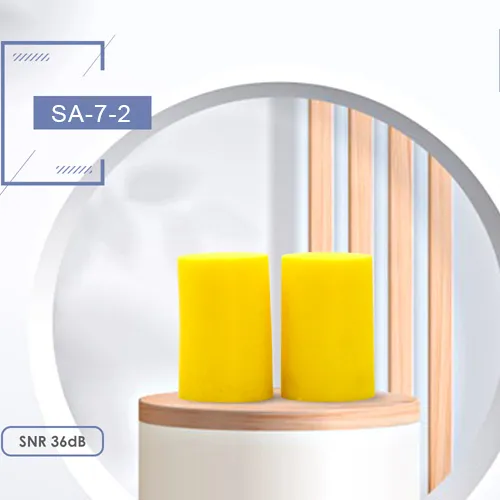
| Cylinder shape | Uniform diameter, easy roll-down | Standard industrial use |
| Bell shape | Wider base for easier removal | Food processing, cleanrooms |
| Corded | Connected by a cord worn around the neck | Intermittent use environments |
| Detectable | Contains metal insert, detectable by metal detectors | Food and pharmaceutical manufacturing |
| Banded | Foam tips on a lightweight headband | Quick on-off in variable noise environments |
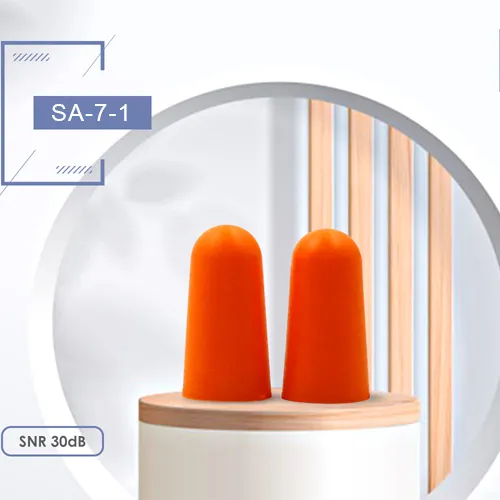
Our SA-7-1 Classical Bullet Shape Foam Ear Plugs are the most versatile option for industrial distributors, while the bell shape variant is specifically designed for food processing facilities where easy removal without touching the ear canal is required.
Silicone Ear Plug Variants
| Variant | Description | Target Application |
|---|---|---|
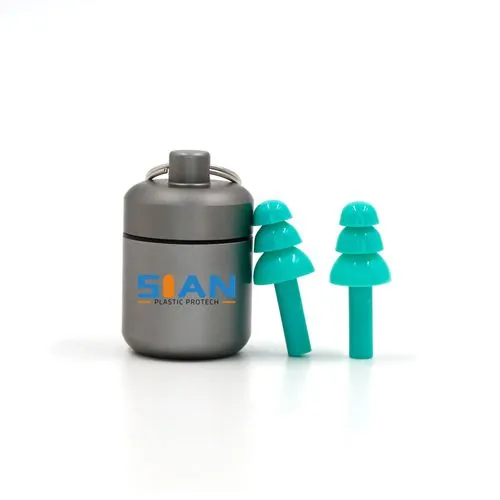
| Triple-flange | Three graduated flanges for deep seal | High-noise industrial, shooting |
| Dual-flange | Two flanges, balance of seal and comfort | General use, swimming |
| Conical | Simple cone shape, universal fit | Travel, sleep, concerts |
| Filtered (with acoustic filter) | Reduces volume evenly while preserving clarity | Musicians, bartenders, event staff |
| Custom-moldable | User heats and molds to ear shape | Premium consumer, industrial |
| Children's size | Smaller dimensions for kids' ear canals | Swimming, travel, noise events |
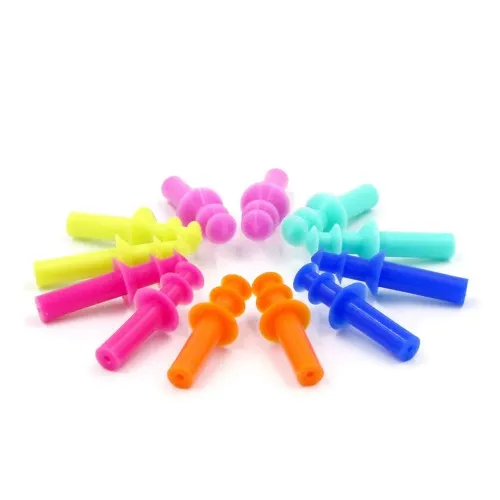
Our SA-1-1 Silicone Swimming Earplugs showcase how silicone's color versatility and waterproof properties make it the ideal material for consumer lifestyle brands.
Customization Comparison
| Customization | Foam | Silicone |
|---|---|---|
| Color options | Limited (dye affects foam properties) | Extensive (any Pantone color) |
| Shape customization | Limited (tooling changes expensive) | Flexible (injection mold modifications) |
| Logo application | Wrapper/packaging only | Directly on product + packaging |
| Carrying case | Not applicable (disposable) | Aluminum tin, silicone pouch, keychain case |
| Bundling options | Dispenser box, poly bag, blister | Gift box, travel kit, branded case |
Sourcing Considerations from China
Foam Ear Plugs
- Manufacturing process: Foam extrusion + cutting + shaping. Requires specialized PU foam production lines.
- Key quality factor: Foam density and recovery time. Too dense = uncomfortable. Too soft = poor seal. Recovery time should be 20–40 seconds.
- Testing requirement: Acoustic testing per ANSI S3.19 or EN 352-2 to establish NRR/SNR values.
- Shelf life: 3–5 years when properly sealed. Foam degrades over time if exposed to UV or humidity.
- Shipping consideration: Lightweight but bulky. Sea freight is standard; foam compresses well in shipping.
Silicone Ear Plugs
- Manufacturing process: Injection molding with medical-grade liquid silicone rubber (LSR). Requires precision molds.
- Key quality factor: Silicone hardness (Shore A durometer). Too hard = uncomfortable. Too soft = poor seal. Typical range: 30–50 Shore A.
- Testing requirement: Same acoustic testing as foam, plus biocompatibility testing if marketed for medical or swimming use.
- Shelf life: 5–10 years. Silicone is highly stable and doesn't degrade under normal storage conditions.
- Shipping consideration: Heavier per unit than foam, but much smaller volume. Shipping cost per unit is similar.
Making Your Decision: A Framework
Use this decision matrix based on your business situation:
| If Your Business Is... | Choose Foam | Choose Silicone | Choose Both |
|---|---|---|---|
| Industrial safety distributor | ✓ Primary product | Supplementary | ✓ Full catalog |
| Consumer brand (Amazon/DTC) | Supplementary | ✓ Primary product | ✓ Market segmentation |
| Private label startup (limited budget) | ✓ Lower risk entry | ✓ Higher margin entry | Start with one, add later |
| Safety supply company | ✓ Bread and butter | Growing category | ✓ Full offering |
| Niche brand (musicians, swimmers) | Not relevant | ✓ Perfect fit | No |
| OEM for other brands | ✓ High volume | ✓ High value | ✓ Maximum flexibility |
Our recommendation: If you're starting a new ear plug brand and have to choose one, pick the type that aligns with your target customer. For B2B industrial: start with foam. For consumer/lifestyle: start with silicone. If you have the capital and distribution for both, offering a complete hearing protection catalog is the strongest market position.
Ready to Source?
At EASTRAGON, we manufacture both foam and silicone ear plugs in our own facility, with full OEM/ODM customization services. Every product carries CE and ANSI dual certification, and we offer flexible MOQs for first-time buyers.
Explore our product lines:
- Foam ear plugs — PU foam, bullet, cylinder, and bell shapes
- Silicone ear plugs — reusable, filtered, swimming, and custom-moldable
- Ear muffs — passive and electronic options
Request Free Samples of Both Types →
Frequently Asked Questions
Which type has better noise reduction — foam or silicone?
Foam ear plugs generally have higher NRR/SNR ratings (29–33 NRR for foam vs. 17–27 NRR for silicone). However, real-world performance depends heavily on proper fit. Foam requires correct insertion technique to achieve its rated protection, while silicone provides more consistent real-world performance due to its pre-formed shape. For maximum noise reduction in industrial settings, foam is typically the better choice.
Can I sell both foam and silicone under the same brand?
Yes, and many successful hearing protection brands do exactly this. Foam and silicone serve different customer segments, so offering both expands your addressable market without cannibalizing sales. Use your brand as the umbrella and create product line names to differentiate (e.g., "ProGuard Industrial" for foam and "ProGuard Lifestyle" for silicone).
What are the MOQ differences between foam and silicone?
Foam ear plugs typically have higher MOQs (50,000–100,000 pairs) because the production process is optimized for high-volume runs. Silicone ear plugs have lower MOQs (3,000–20,000 pairs) because injection molding is more flexible for smaller batches. If you're starting with limited capital, silicone offers a lower entry barrier in terms of unit commitment.
How do I choose the right silicone hardness for my product?
Silicone hardness is measured in Shore A durometer. For ear plugs, 30–40 Shore A provides a soft, comfortable fit ideal for sleep and consumer use. 40–50 Shore A provides a firmer seal better suited for industrial or high-noise environments. Request samples at different hardness levels from your manufacturer and test them with your target users before committing to production.
Are foam ear plugs really single-use only?
Yes, for both hygiene and performance reasons. PU foam absorbs oils, sweat, and earwax during use, which degrades the foam's recovery properties and creates a bacterial growth medium. Reusing foam ear plugs can lead to ear infections and reduced noise attenuation. This is actually a business advantage — the disposable nature drives repeat purchasing and predictable revenue.
Which type is better for Amazon/e-commerce brands?
Silicone ear plugs perform significantly better on Amazon and direct-to-consumer channels. They support higher price points ($10–25 retail vs. $5–10 for foam multipacks), enabling profitable unit economics after Amazon fees. They also offer more branding and packaging differentiation, which is critical for standing out in search results. Foam ear plugs on Amazon face intense price competition from established brands and private labels.
Published by EASTRAGON — Professional hearing protection manufacturer since 2005. Foam & silicone ear plugs, ear muffs. CE & ANSI dual-certified. OEM/ODM for 50+ countries.