Noise-induced hearing loss (NIHL) is one of the most common occupational hazards worldwide. According to the World Health Organization, over 400 million people globally suffer from disabling hearing loss, and a significant portion of these cases originate from workplace noise exposure. The good news is that NIHL is entirely preventable with proper hearing protection.
Understanding Industrial Noise Levels
Before selecting hearing protection, it is essential to understand the noise levels present in your work environment. Sound is measured in decibels (dB), and prolonged exposure to levels above 85 dB can cause permanent hearing damage. Here are some common industrial noise levels:
- Manufacturing floors: 85-100 dB
- Construction sites: 90-110 dB
- Metal stamping and forging: 95-115 dB
- Warehouses and distribution centers: 82-112 dB
- Airport ground operations: 100-140 dB
Different environments require different levels of protection. A factory floor operating at 90 dB has different requirements than a construction site where jackhammers reach 110 dB. This is why choosing the right type and level of hearing protection is critical.
Foam Ear Plugs: The Workhorse of Industrial Hearing Protection
Foam ear plugs remain the most widely used hearing protection device in industrial settings worldwide. Made from slow-rebound polyurethane foam, they are rolled into a tight cylinder, inserted into the ear canal, and expand to create a secure seal. Their popularity stems from several key advantages.
First, foam ear plugs provide the highest Noise Reduction Rating (NRR) of any hearing protection type, typically ranging from 29 to 37 dB. This makes them suitable for even the loudest industrial environments. They are also extremely cost-effective when purchased in bulk, making them ideal for large workforces that require disposable protection.
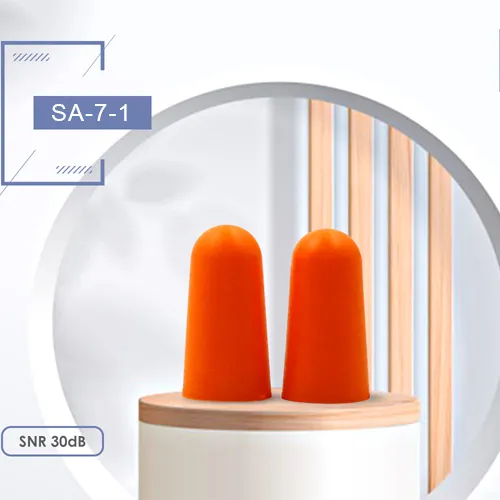
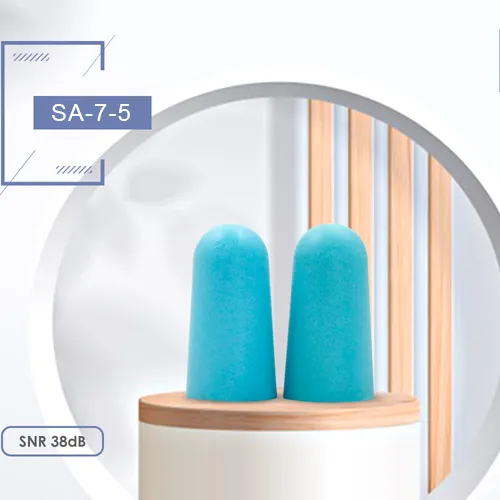
Our SA-7-1 Classical Bullet Shape Foam Ear Plugs feature a tapered design that fits most ear canals comfortably and provides excellent attenuation across all frequencies. For environments where workers need reliable all-day protection, the SA-7-5 Standard Bullet Shape Foam Ear Plugs offer consistent performance with a soft, skin-friendly material that minimizes irritation during extended wear.
Ear Muffs: When You Need Quick On-and-Off Protection
Ear muffs are the preferred choice when workers need to frequently move between noisy and quiet areas. Unlike ear plugs, which require proper insertion technique, ear muffs can be put on and removed in seconds. They consist of cushioned cups that cover the entire ear, connected by an adjustable headband.
Ear muffs are particularly beneficial in situations where hygiene is a concern, as they do not require contact with the ear canal. They are also easier to monitor for compliance — supervisors can visually confirm that workers are wearing them.
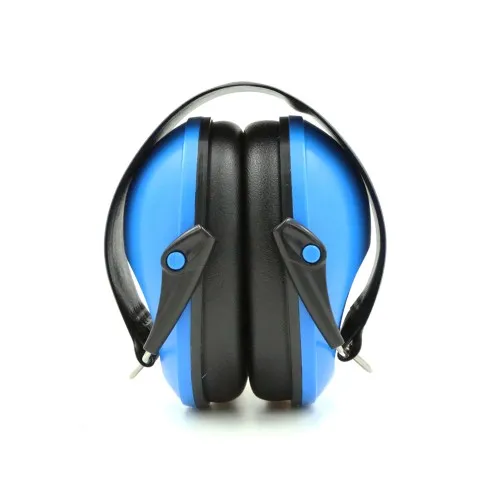
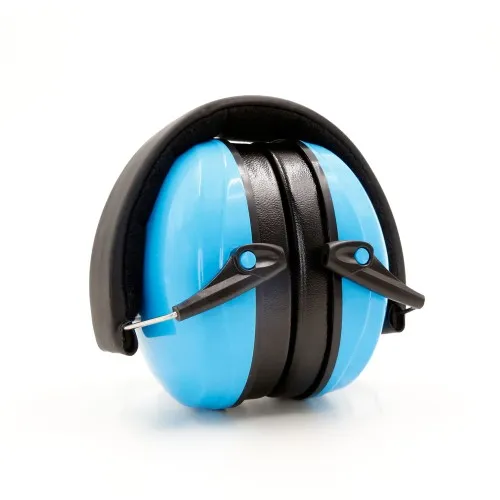
Our SA-8-5 Durable Soundproof Foldable Earmuffs are designed specifically for industrial environments, featuring a robust construction that withstands daily use while remaining comfortable for full-shift wear. The foldable design makes them easy to store when not in use.
Choosing Between Ear Plugs and Ear Muffs
The choice between ear plugs and ear muffs depends on several factors unique to your work environment:
- Noise level: For extremely high noise (above 100 dB), foam ear plugs generally provide higher NRR. In some cases, dual protection (plugs plus muffs) may be required.
- Duration of exposure: For all-day wear, lightweight foam ear plugs may be more comfortable. For intermittent exposure, ear muffs offer convenience.
- Work conditions: In hot, humid environments, ear muffs can cause sweating. Ear plugs are better suited for these conditions.
- Compatibility: Workers wearing hard hats, safety glasses, or respirators may find that ear muffs interfere with other PPE. Ear plugs are more compatible with additional safety equipment.
- Hygiene: In dusty or dirty environments, inserting ear plugs with contaminated hands can cause ear infections. Ear muffs are safer in these conditions.
Proper Fit: The Most Important Factor
No matter how high the NRR rating, hearing protection only works if it fits correctly. Studies have shown that real-world attenuation is often 50% or less of the labeled NRR due to improper fit. Here are best practices for ensuring proper fit:
For foam ear plugs: Roll the plug into a tight, crease-free cylinder. Pull the top of your ear upward and back to straighten the ear canal. Insert the plug and hold it in place for 20-30 seconds while it expands. The plug should be deep enough that the end is not visible from the front.
For ear muffs: Adjust the headband so the cups fully cover both ears. The cushions should create a complete seal around the ears with no gaps. Hair, jewelry, glasses temples, and hard hat straps should not break the seal.
Noise Assessment and Selection Workflow
Industrial ear protection selection should start with a clear problem definition: what noise level workers face, for how long, and while wearing what other PPE. Many buyers jump straight to the highest NRR or SNR on a brochure, but that rarely produces the best field result. A practical buying process begins with a noise survey, then checks whether workers are exposed continuously or intermittently, whether speech communication matters, and whether helmets, eyewear, or respirators will interfere with the fit.
- Map the task: Identify where the noise occurs and whether the worker stays in that area or moves in and out of it.
- Classify the exposure: Continuous machine noise, intermittent maintenance noise, and impulsive impact noise may require different solutions.
- Review wearer behavior: If users remove protection frequently, products that are quick to reapply may outperform technically stronger but less convenient options.
- Check PPE compatibility: Ear muffs can lose effectiveness if the seal is broken by eyewear arms, hard-hat adapters, or poor fit.
This workflow helps explain why many safety managers keep both ear plugs and ear muffs in the same inventory. Foam plugs are often the best answer for full-shift industrial use, while muffs may be more practical for visitors, inspectors, short-duration tasks, or departments where supervisors need a visible compliance check.
When Dual Protection Makes Sense
In very high-noise environments, one device may not be enough in real use. Dual protection usually means combining high-attenuation plugs with over-the-ear muffs. This approach is common in metal stamping, mining, aviation ground operations, and certain maintenance or impact-noise applications.
For example, a buyer may combine the SA-7-1 Classical Bullet Shape PU Foam Ear Plugs with the SA-8-10 Apple Shape Adult Size Earmuffs when measured site noise leaves very little safety margin for fit error. Dual protection should still be based on measurement and task analysis, not just on the impression that an area is loud.
Compliance and Training
The most effective hearing protection program combines the right equipment with proper training. Workers need to understand not just how to wear their protection, but why it matters. Consider implementing fit-testing programs to ensure each worker achieves adequate attenuation. Regular training refreshers and visible signage in high-noise areas help maintain compliance rates.
Training also helps procurement teams evaluate what product will actually perform on site. If workers have limited time for PPE fitting or there is frequent use by temporary labor, a technically correct but difficult-to-fit product may produce worse results than a slightly lower-rated product with better compliance behavior. In other words, the best industrial ear protection is the one workers can fit correctly and keep wearing.
Buyer Checklist Before Placing a Bulk Order
- Request certification documents: Confirm whether the product is tested to CE EN 352, ANSI S3.19, or both.
- Review packaging options: Bulk issue packs, dispenser refills, corded versions, and private label packs all affect cost and site use.
- Check sample fit: Test with actual workers wearing their normal helmets, glasses, or respirators.
- Ask for application guidance: Good suppliers should help match product type to measured workplace conditions.
Frequently Asked Questions
What type of ear protection is best for a factory floor?
For continuous industrial noise, foam ear plugs are often the most economical and effective choice. For visitors, supervisors, or intermittent exposure, ear muffs may be easier to manage because they are quicker to put on and easier to inspect visually.
Are ear muffs better than ear plugs?
Not in every case. Ear muffs are easier to supervise and easier to reapply, but foam ear plugs often provide higher attenuation in very loud environments. Selection should be based on measured noise, duration of wear, and compatibility with other PPE.
When should we use dual protection?
Dual protection should be evaluated when workplace noise is extremely high, when there are strong impact-noise peaks, or when risk assessments show that a single device leaves too little margin for fit error.
How often should disposable foam ear plugs be replaced?
They should be replaced whenever they become dirty, damaged, or no longer recover their shape correctly. Many industrial users replace them daily or by shift for hygiene and performance consistency.
Can one ear protection product work across all departments?
Sometimes, but not always. Different departments may have different noise profiles, different hygiene conditions, and different PPE combinations. Many sites get better compliance by offering more than one approved option.
What should buyers ask suppliers before approving a bulk order?
Ask for product-level certification, application guidance, packaging options, MOQ, lead time, and samples for site trials. A short on-site evaluation usually prevents far more expensive corrections later.
Bulk Purchasing for Industrial Operations
For industrial buyers managing hearing protection programs across large workforces, cost efficiency and consistent quality are paramount. At EASTRAGON, we manufacture over 200 million ear plugs annually with CE EN352-2 and ANSI S3.19 certifications. Our factory-direct pricing, OEM/ODM capabilities, and low minimum order quantities make it easy to establish a reliable supply chain for your hearing protection needs.
Whether you need disposable foam ear plugs for a 500-person factory floor or durable ear muffs for a construction crew, we can provide samples and a custom quote within 24 hours. Contact our team to discuss your requirements.